Why Fastnet matters beyond its silhouette
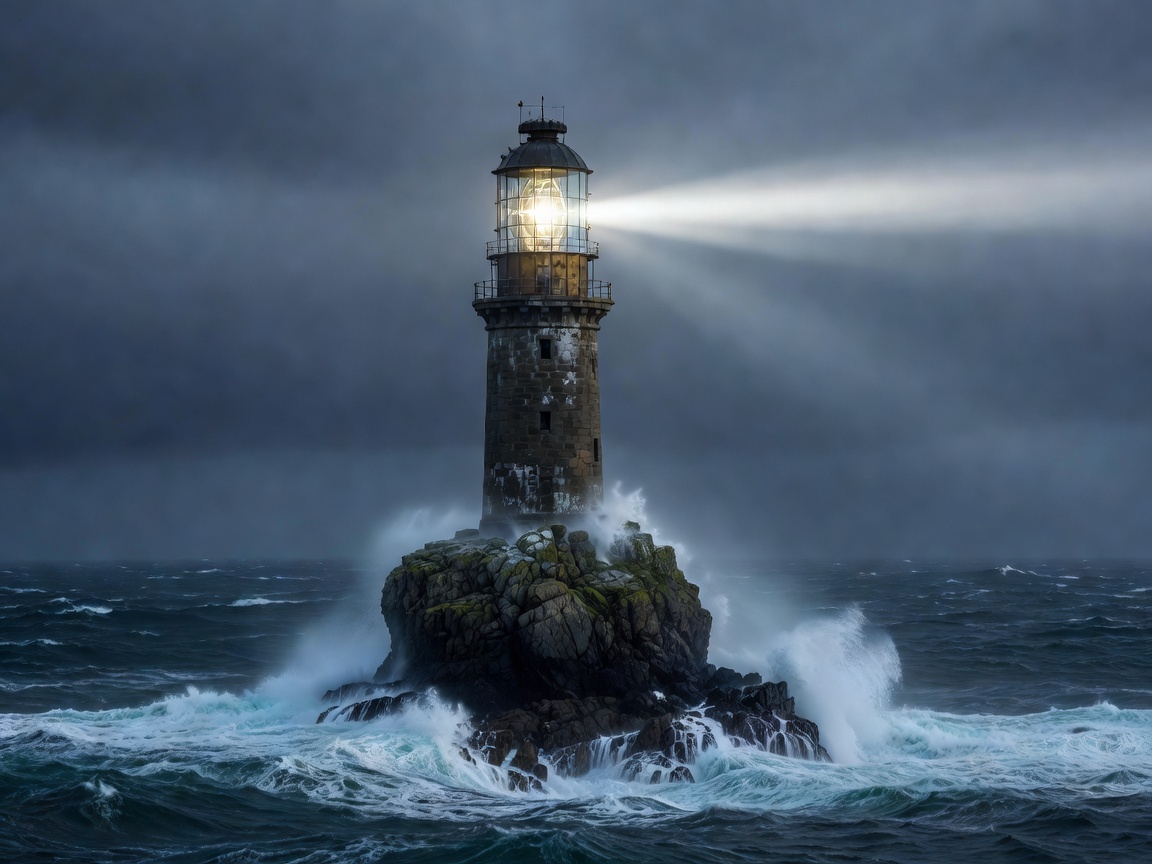
Fastnet Rock lies off the coast of County Cork in a position that gives it unusual navigational prominence. To many readers, the name first suggests exposure and drama. Those are real enough, but they are not the main lesson. Fastnet matters because it demonstrates that a lighthouse must be legible in a network of other aids to navigation. A mariner does not only need to see a light. A mariner needs to know which light it is and what that recognition means for the vessel’s position.
That is where the idea of light character becomes central. The flash sequence, period and visual behaviour of a lighthouse help distinguish it from neighbouring stations. The tower provides height, housing and protection, but the identity of the aid lies in the signal pattern. Fastnet therefore invites us to shift attention from masonry alone to optics, apparatus and operation.
Light characteristic as practical language
A light characteristic is not an ornament added for interest. It is a practical language. Fixed lights, flashing lights, occulting lights and grouped flashes all answer the same broad need: make the station recognisable. In areas where several coastal lights may be in view, distinction is essential. The logic is simple. Ambiguity in a chart room or wheelhouse can become error at sea.
Fastnet’s fame makes it a good example of the principle, but the principle is general across the service run by the Commissioners of Irish Lights. A seamark has to fit a system. Its characteristic should complement other local marks rather than confuse them. This is why lighthouse administration is inseparable from hydrographic and navigational thinking. One light is never just one light. It belongs to a coastline pattern.
Optical equipment historically carried a great deal of this burden. Lens systems, burners and later electrical light sources worked together to shape beam strength and recognisability. Improvements in optical design meant that more useful signalling could be drawn from available sources. When people speak admiringly of classic lighthouse optics, what they often mean is not only engineering refinement but signalling refinement.
The station in Irish lighthouse administration
Fastnet also helps place the Commissioners of Irish Lights in view. Their responsibility has long involved difficult stations and wide sea areas where weather, traffic and coastline form complicated demands. To manage such aids effectively, an authority must balance local conditions with network consistency. Fastnet is therefore both singular and administrative. It stands alone physically, yet it is managed as part of an organised system of marine signalling.
This administrative layer matters when technology changes. Updating a power source or changing control arrangements at a major station is not just a technical substitution. It must preserve the reliability and recognisability of the aid within the broader navigational framework. That requirement tends to make lighthouse change evolutionary rather than whimsical.
Structure, exposure and maintenance
None of this means the tower itself is secondary. Fastnet’s offshore setting makes robust structure indispensable. A lantern cannot serve if the tower that carries it is unstable, inaccessible or repeatedly damaged. As with other sea-rock lights, the lower body and foundation logic still matter. Exposure drives maintenance needs in metalwork, glazing, doors, landing arrangements and protective finishes.
Yet Fastnet reminds us that structural grandeur is a means, not the end. A station could be magnificently built and still be operationally poor if the light were difficult to maintain, optically weak or confusingly characterised. The best lighthouse engineering keeps the service duty in front of the eye at all times.
Automation and what changed
The move toward automation at stations such as Fastnet transformed the human pattern of lighthouse work. Permanent residence became less necessary as lamp systems, power supply, switching arrangements and remote alarms improved. The Commissioners of Irish Lights, like other lighthouse authorities, could supervise stations with fewer staff living on site.
That shift brought advantages, especially in routine efficiency and reduced exposure of keepers to extreme locations. But it also changed what the station meant as a place. Living quarters and service spaces built for staffed operation acquired a different status. Some remained useful for visiting technicians; others became historical traces of a more labour-intensive era.
Automation did not simplify every engineering question. Reliability became even more important because faults might persist longer between visits. Remote signals can announce a problem, but they cannot replace a crew landing in difficult conditions. For a site like Fastnet, access remains a stubborn fact.
Fastnet as a guide to reading lighthouses properly
If Eddystone teaches iterative structural design, Fastnet teaches disciplined reading of function. Look beyond the tower’s fame and ask: how is the light differentiated, what area does it help interpret, what authority maintains it, and how did automation alter the station without removing its exposure? Those are the questions that turn admiration into understanding.
Fastnet’s enduring lesson is almost austere. The lighthouse exists to communicate safely at sea. Everything else — masonry, lantern architecture, prestige, even romance — serves that end. Once seen that way, the whole site becomes sharper and more interesting.